American Classics: The History and Legacy of Hamm’s Beer
American Classics: The History and Legacy of Hamm’s Beer
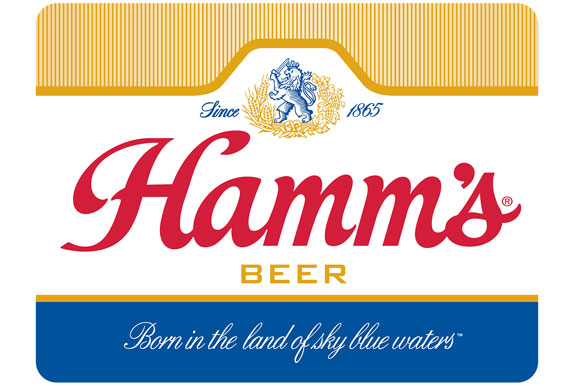
(Courtesy Molson Coors)
If you grew up anywhere near the Midwest, there’s a decent chance you’ve heard it before you ever tasted it—the jingle, the waterfall, that oddly soothing cartoon bear. Hamm’s isn’t just a beer. It’s a vibe. A very specific, very American, slightly retro vibe that somehow still resonates.
Born on the Banks of the Mississippi
Hamm’s Beer traces its roots back to 1865, when German immigrant Theodore Hamm took over a struggling brewery in St. Paul, Minnesota. It wasn’t exactly a glamorous start—more survival than strategy—but Hamm had good timing. Post–Civil War America was thirsty, and German-style lagers were quickly becoming the beer of choice.
By the late 1800s, Hamm’s had grown into a regional powerhouse. Its location near the Mississippi River wasn’t just scenic—it was practical. The river helped with distribution, and Minnesota’s naturally cold climate made lagering a whole lot easier before refrigeration became standard.
From Regional Staple to National Name
Hamm’s really hit its stride in the mid-20th century, when it leaned hard into something many breweries now take for granted: branding. And not subtle branding either. We’re talking full-on radio jingles, TV spots, and that now-iconic “Land of Sky Blue Waters” campaign.
The animated Hamm’s Bear—cheerful, slightly clumsy, and always near a pristine waterfall—became one of the most recognizable mascots in American beer. It was weird. It was catchy. And it worked.
By the 1950s and ’60s, Hamm’s wasn’t just a Midwest favorite—it was a national player, competing with the big boys at a time when the American beer landscape was rapidly consolidating.
The Long, Slow Fade
Like a lot of regional breweries, Hamm’s ran into trouble in the latter half of the 20th century. A wave of mergers, acquisitions, and shifting consumer tastes started to squeeze out smaller players. Hamm’s changed hands multiple times, bouncing between larger brewing companies that often treated it more like a legacy asset than a flagship brand.
The original St. Paul brewery eventually shut down in 1997, marking the end of an era. For a while, it looked like Hamm’s might quietly fade into beer-history footnotes—remembered mostly by collectors of vintage signs and anyone nostalgic for old-school TV ads.
The Unexpected Afterlife
But here’s the thing about Hamm’s: it never really went away.
Today, the brand is owned by Molson Coors and still brewed (though not in Minnesota anymore). It’s no longer competing for shelf space with flashy craft IPAs or limited-edition sours—and it doesn’t seem particularly interested in trying.
Instead, Hamm’s has carved out a different lane: affordable, no-frills, classic American lager. And in an era where beer drinkers are just as likely to chase nostalgia as they are the next big thing, that’s turned out to be a surprisingly solid strategy.
Why Hamm’s Still Matters
Hamm’s isn’t trying to reinvent beer. It’s not chasing trends, dropping hazy double dry-hopped anything, or collaborating with a coffee roaster you’ve never heard of. What it offers instead is consistency—and a direct line back to a different time in American brewing.
For some, it’s a budget-friendly fridge staple. For others, it’s a throwback to fishing trips, family barbecues, or that one bar that never bothered updating its décor. And for a growing number of younger drinkers, it’s something else entirely: a retro discovery that feels more authentic than half the “heritage-inspired” brands flooding the market.
“Greatly Exaggerated” Rumors of its Demise
Hamm’s may not dominate headlines, but it’s quietly endured longer than many of its flashier competitors. And recent rumors that it was being discontinued were explicitly denied by Molson Coors.
It’s primarily a midwestern beer nowadays, but its fans are legion and in a beer world that often feels obsessed with what’s next, there’s something refreshing about a brand that’s content to just… stick around.
About the Author: American Craft Beer