A Craft Beer Lover’s St. Patrick’s Day Primer
A Craft Beer Lover’s St. Patrick’s Day Primer
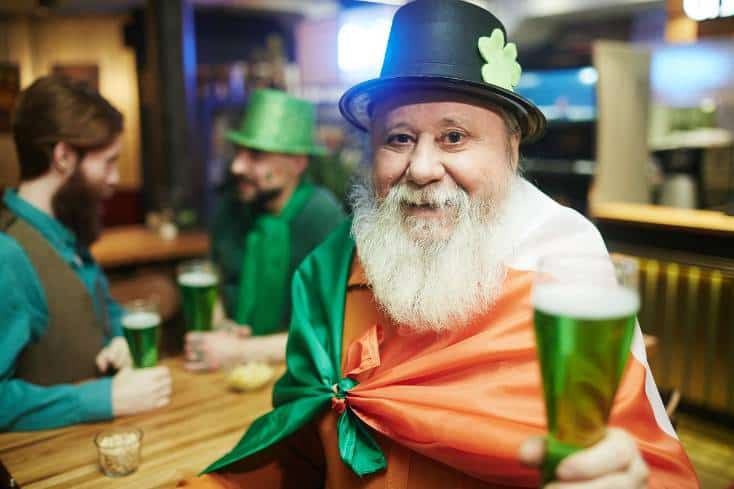
Every March 17, America suddenly becomes the world’s largest Irish pub.
Millions of people who couldn’t find Dublin on a map happily throw on green shirts, questionable leprechaun hats, and crowd into bars to celebrate St. Patrick’s Day with a pint in hand. And while plenty of those pints will be filled with mass-produced lager—sometimes dyed an unsettling shade of green—the craft beer crowd tends to approach the holiday a little differently.
Around here, we prefer the more serious stuff.
But amid all the parades, shamrocks, and questionable costume decisions, it’s worth asking: what exactly is St. Patrick’s Day really about anyway?
Will the Real St. Patrick Please Stand Up?
Let’s start with the fact that Ireland’s beloved St. Patrick was actually British.
It’s true.
And even more amazing, he was kidnapped by pirates at the age of 16 and forced to live as a slave in Ireland for six years before eventually escaping and returning home. The details of his life are a bit murky, but historians generally agree on a few key points.
Patrick later returned to Ireland as a missionary, rising to the rank of bishop within the Catholic Church and spending much of his life converting Druids and other pagan followers to Christianity. By the seventh century, he had effectively become the patron saint of Ireland.
Of course, legend has filled in some of the gaps over the centuries. The most famous tale claims he drove all the snakes out of Ireland after being attacked by them—though historians note there’s no evidence snakes ever lived on the island in the first place.
And while we’re fairly certain he never weighed in on the great Bushmills vs. Jameson debate—or Guinness vs. Harp—the finer details of his personal tastes remain lost to history.
Early St. Patrick’s Day Traditions
In the early 17th century, the Catholic Church made his accepted date of death—March 17—an official feast day. Ireland eventually declared it a national holiday in 1903.
The modern celebration has grown quite a bit since then. In 1996, Ireland expanded the holiday into a three-day festival that has since grown into a five-day celebration drawing roughly a million visitors each year for parades, concerts, and fireworks.
Why Green on St. Patrick’s Day?
The whole “wearing green” tradition isn’t quite as straightforward as you might think.
Sure, Ireland’s flag includes green, and the country is famously known as the Emerald Isle. But things get a little confusing when you learn that the Order of St. Patrick—founded in 1783—somehow chose blue as its official color.
Apparently even the Irish couldn’t fully agree on the dress code.
Coming to America
Irish immigrants brought St. Patrick’s Day celebrations to the United States during the 19th century, continuing the traditions of parades and festivals in their new home.
Over time, the American version of the holiday grew into something much bigger—and a lot louder.
While St. Patrick may still be honored inside churches around the world, the secular celebration in the United States has taken on a life of its own. Cities host massive parades, bars pour countless pints, and Chicago famously dyes its river green every year.
And while there are certainly historical and spiritual reasons to remember the life of a missionary who died more than 1,500 years ago, it’s safe to say Americans have added their own twist to the celebration.
Mostly involving beer.
Lots of beer.
And whether you’re raising a traditional Irish stout, a malty red ale, or a modern craft interpretation of either, St. Patrick’s Day remains one of the few holidays where the entire country seems perfectly happy to toast together—Irish or not.
About the Author: American Craft Beer

Get Social

Join Our Newsletter