Rare Beer Styles: Burton Ale
Rare Beer Styles: Burton Ale
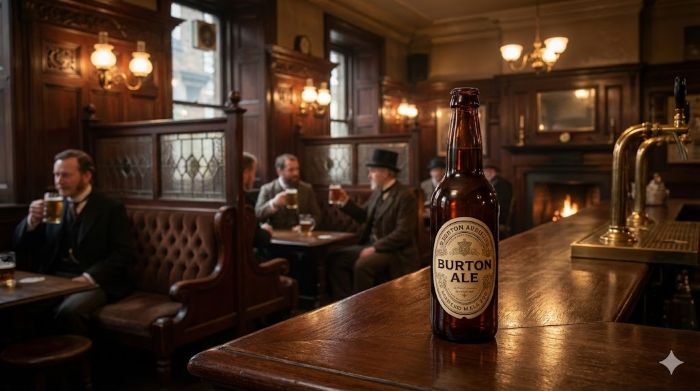
Long before style guidelines and tasting sheets, one town’s water changed the course of brewing history — and inspired a powerful ale that carried its name around the world.
Burton Ale takes its name from Burton upon Trent, a small English town that once stood at the very center of the global beer trade. In the 18th and 19th centuries, Burton wasn’t just another brewing hub — it was the brewing capital of Britain. The reason was largely geological.The local water supply was naturally high in gypsum, a mineral that sharpened hop bitterness and enhanced dryness, giving Burton’s beers a firm, structured finish.
That distinctive water profile became so prized that brewers elsewhere began “Burtonizing” their own water to replicate it.
Although the town would later become synonymous with pale ales and India Pale Ales, Burton’s early reputation was built in part on something darker and stronger. Burton Ales were robust, full-bodied beers, often ranging from seven to well over ten percent alcohol. Deep amber to brown in color, they were rich with malt character and sturdy enough to age. And major Burton brewers such as Bass helped carry these strong ales far beyond England’s shores.
Before IPA became the empire’s export champion, these powerful ales were shipped abroad, including to Russia and the Baltic region, where drinkers appreciated beers with weight and warmth.
Trying to pin Burton Ale to a modern style guideline can be tricky. In many cases, these beers were early versions of what we would now call English barleywine or strong ale — substantial, malt-forward beers built for the cellar. They typically poured dark amber to brown and leaned malty-sweet, offering notes of caramel and dried fruit, sometimes fig or plum. Firm hopping provided balance, delivering enough bitterness to cut through residual sugars without approaching the aggressive, resinous character that later defined IPA.
The result was a beer that felt both luscious and bracing: full-bodied and warming, with a depth of malt and a gentle mineral snap beneath it all. Alcohol was present, but ideally integrated rather than overpowering.
Over time, however, IPA eclipsed nearly everything else in England. As lighter, brighter pale ales captured the market, the term “Burton Ale” gradually faded from everyday use. By the 20th century, it had become more of a historical reference than a barroom staple.
Still, the idea never fully disappeared. Some British breweries continued producing strong ales under the Burton name, and modern craft brewers occasionally revive the term when they want to signal something traditional, richly malted, and unapologetically English.
A rarity today, yes — but Burton Ale remains a reminder that beer styles were once shaped less by categories and more by chemistry, geography, and the demands of trade.
###
Want more Rare Beer Styles?
We’ve got’em..
Rare Beer Styles: The Baltic Porter
About the Author: American Craft Beer