Rare Beer Styles: Altbier – Germany’s Remarkable “Old Beer”
Rare Beer Styles: Altbier – Germany’s Remarkable “Old Beer”
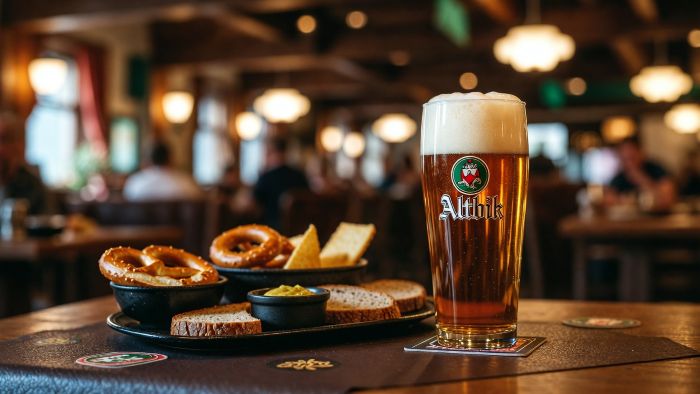
So you’re wandering the narrow streets of Düsseldorf’s Old Town on a crisp fall evening, and the cozy, tucked away German beer halls couldn’t be more inviting. Inside, waiters in long aprons zip around balancing trays loaded with tall, slender glasses of something, cold, coppery and alluring.
That’s Altbier, Germany’s remarkable “Old Beer.”
The Basics
Altbier gets its “old” label because it’s a top-fermented ale in a country that basically wrote the book on bottom-fermented lagers. Back before refrigeration made cold-lagering easy, most beer was ale-style—warm-fermented and a bit wilder.
And the name “Altbier” literally means “old beer” in German…So when the crisp, clean Bavarian lagers started flooding the market in the 19th century, Düsseldorf brewers doubled down on their traditional method and slapped “Alt” on the label to stake out their turf.
So What Does an Altbier Taste Like?
Imagine a beer that’s somehow both hearty and easy-drinking.
And because it’s fermented warm like an ale, then cold-conditioned like a lager, the end result is a beer that’s clean, crisp, and structured, but with a subtle fruity edge you’d never find in a true lager. Think toasted bread crusts, light caramel, and a firm but elegant bitterness that keeps everything in balance.
Visually, Altbier sits somewhere between copper and deep amber, often brilliantly clear. On the palate, malt leads the way, but the beer never gets too sweet or too heavy. And although it’s malt-forward, but the hops (typically German varieties) bring a dry bitterness to the brew that makes Altbier endlessly drinkable.
True Düsseldorf Altbier—like from the “Big Four” brewing houses (Uerige, Schlüssel, Füchschen, and Schumacher)—is the gold standard.
These spots often have their own house yeast strains and a signature twist. Uerige’s version leans extra bitter and complex; Füchschen’s feels a bit softer and maltier. You’ll also spot “Sticke Alt” (secret Alt) occasionally—stronger, maltier, hoppier limited releases that locals treat like hidden treasures.
In Düsseldorf, Altbier isn’t just a style, it’s a way of life. Traditional brewpubs, known as Hausbrauereien, serve Altbier in small cylindrical glasses called Stangen. Servers, or Köbes, roam the room replacing empty glasses without being asked, marking your coaster with tally marks until you cover it to signal you’re done. It’s a communally efficient, and charmingly no-nonsense exercise, much like the beer itself.
Outside of Germany, Altbier is rare, often misunderstood, and sometimes mis-brewed.
It can be mistaken for an amber ale or watered-down brown, when in reality it demands precision. Too sweet and it loses its snap. Too hoppy and it feels out of place. When done right, though, Altbier is a masterclass in restraint.
And a few American craft brewers have remained committed to the style…
American Craft Beer Altbiers
Alaskan Brewing, Amber Ale (Juneau, AK) – While the name is deceiving, it’s identified as an “Alt Style Beer” on its label, this tasty, straight ahead ale is identified by the brewer as being alt due to it needing to “ferment more slowly and colder temperatures than most ales,” causing an aged or older beer. It’s a clean easy 5.3% ABV malt-forward that’s available all year round.
Double Bag, Long Trail Brewing (Bridgewaters Corners, VT) – This big “Stickebier” comes in at 7.2% ABV yet an IBU of only 39, making this a big malt bomb with quite a following in the Northeast. This strong ale has all the easy drinking, biscuit and caramel flavors you’d expect from an Alt, yet kicked up to the next level.
OMB Copper, Old Mecklenburg Brewery (Charlotte, NC) – Considered by many to be the best Altbier in America, it’s also one of the few to distinguish itself as being made in the “authentic Düsseldorf style.” Their flagship beer is made with top-fermenting yeast, noble Bavarian hops and clocks in at 4.8% ABV.
Our Take
Like so many Old World styles reimagined stateside, American Altbiers are both a homage to the style’s Düsseldorf roots and a wonderful opportunity to step away from the many hop-forward brews that dominate the modern craft beer scene.
In a beer culture that often chases extremes, Altbier is a reminder that subtlety can still be exciting. It’s a style built on balance, tradition, and quiet confidence—one that doesn’t need to be rediscovered so much as remembered.
###
Want more Rare Beer Styles?
We’ve got ‘em…
Rare Beer Styles: The Baltic Porter
About the Author: American Craft Beer