How To Dose Cannabutter In Beer Recipes
How To Dose Cannabutter In Beer Recipes
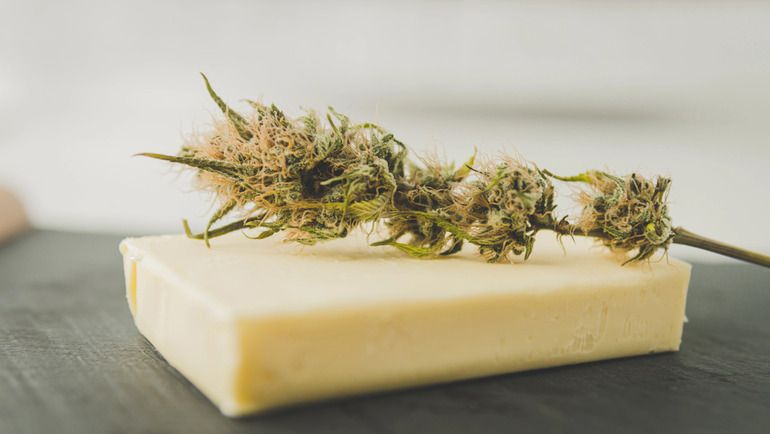
Cannabutter is by no means a new ingredient. It has been decades to impart a slight cannabis flavor to the entire array of edibles, including beer-forward recipes. It has been used in oatmeal and chocolate chip cookies, seafood and beer-like chili, and age-old, light, dry lager batters. Cautiously used, cannabutter may be used to add malt flavor, roasted flavors, and a mild bitterness to the taste, instead of overwhelming it.
Issues begin to occur once cannabutter is put into it casually, with no genuine thought about the amount and the breadth of its application. A spoonful swallowed into a cooking pot will tend to produce dishes that are either flat, unpredictably sharp, or simply put, bad. The calculations of potency are vital, and the introduction of beer adds more variables that are alcohol content, bitterness, and the body. In that regard, it would be essential to understand the proper dosing of cannabutter, which would allow any individual to develop beer-based recipes that would be pleasant and consistent. The following sections define how to dose cannabutter in an easily understandable and controllable way.
What Cannabutter Is And Why Beer Makes It Tricky
Cannabutter is merely butter with cannabinoids, but it is not just a mixture of the two. The first step is decarboxylating cannabis, a heat process that transforms THCA into THC and CBDA into CBD. Butter is also a good medium of delivery since cannabinoids adsorb easily on the fat, thus it makes a good vehicle of regulated infusion.
The recipes that are based on beer have other considerations. Others are short-simmered, others use high temperatures in the oven, and some are made using alcohol, which is already in the dish. All these stages affect the behavior of cannabinoids and the final amount that goes to one portion. Heat exposure, cooking time, and beer strength are some of the factors that contribute to the final result.
That is why cannabutter can be added to recipes of beer without any inconvenience, and the dosing issue becomes an art. Making time to calculate the potency before cooking assists in maintaining balance, uniformity, and control, where the end product does not vex the recipe but complements it.
Decarbing: Where Potency Begins (Or Gets Lost)
Most brewers and cooks decarb flower around 220–240°F (104–115°C) for 30–45 minutes. Decarb efficiency typically lands between 70% and 90%, depending on time, grind, and moisture. You can assume 80% unless you have test results (and few people do).
And don’t decarb “in the butter.” Water and fat blunt the conversion. Dry heat first, infusion second.
Infusion Strength: Know What You’re Making
Start with the label on your cannabis. Say you have 7 grams at 18% THC. That would go like this:
- 7 g × 1,000 mg/g = 7,000 mg cannabis
- 18% THC = 1,260 mg THCA
- Apply 80% decarb efficiency → ~1,000 mg THC available
If you infuse that into one cup (227 g) of butter, your butter holds roughly 4.4 mg THC per gram.
Oil behaves the same way, by the way. Swap grams and volumes as needed.
From Butter To Bowl: Portion Math
This is where people usually guess. Don’t be one of them.
Say your beer-braised chili uses 30 g of cannabutter total.
- 30 g × 4.4 mg THC/g = 132 mg THC in the pot
You serve eight bowls.
- 132 ÷ 8 = 16.5 mg per serving
That’s not a microdose. For many people, it’s a full evening. Adjust the butter amount or serving size accordingly.
If you want help double-checking the math when you move from THC percentage to milligrams per serving, Veriheal has a great edible dosage calculator. Use it to speed things up and reduce errors (especially if you tweak recipes mid-stream).
Alcohol Boil-Off: Myth Or Reality?
A common belief says alcohol “cooks off” in minutes. But testing shows otherwise. After 15 minutes of simmering, about 40% of alcohol can remain; after an hour, roughly 25% may still be there. So yes, it burns off some but not that much, and therefore beer matters for how the dish cooks, not for how strong it hits.
In other words, alcohol does not magically increase cannabinoid potency during cooking. THC doesn’t vaporize at chili temperatures, and alcohol presence doesn’t amplify effects. It can improve extraction slightly in cold applications, but once you’re cooking, fat still does the heavy lifting.
Recipe-Specific Notes
Beer-Braised Chili:
When the major period of simmering is completed, add cannabutter. This time is useful to maintain potency, not to lose dosing calculations, and still to make the butter melt into the depth and body of chili.
Stout Brownies:
The high temperatures of the oven may appear daunting, but the batter, per se, is not frequently above 212degF when being baked. Cannabinoids are not sensitive to these conditions, and the various portions are the determinants in controlling the potency. Regular chopping and service guarantee uniformity.
Lager Batters:
Frying also has more variables because of increased heat and non-uniform exposure. A lower dosage of cannabutter is safer because the distribution may differ between the pieces. To achieve a more controlled finish, using infused oil after frying results in a cleaner finish with no change in the batter’s structure.
Predictability > Power
With repeatability, experienced brewers appreciate it, and the same applies to the kitchen when working with cannabis. Documenting every batch, measuring, and tracking results also contributes to introducing some order to the process. Make a single change- have more (or less) cannabutter but not all three variables: potency, portion size, and recipe amount.
The nature of dishes made out of beer is also worth remembering. Effects can be less readily perceived in rich dishes and savoir-faire dishes with lighter textures, and thus, it may be less apparent that the strength is at work. Considerate dosing, taking this nuance into account, will keep the situation under control and make the experience enjoyable throughout.
About the Author: Beer Blog