Beer Briefs: Scientists Grow Meat From Spent Brewing Grain
Beer Briefs: Scientists Grow Meat From Spent Brewing Grain
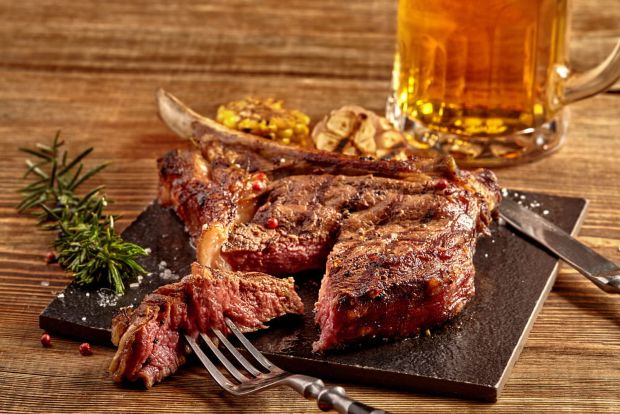
The leftovers from brewing beer may soon play a surprising role in the future of food. According to new research from University College London (UCL), yeast waste from breweries can be turned into an edible structure that helps grow cultivated meat—often called lab-grown meat—more cheaply and sustainably.
The study, published in Frontiers in Nutrition, looks at how bacterial cellulose grown from brewing waste can act as a “scaffold” for cultivated meat. These scaffolds give animal cells something to grow on, helping them form textures that look and feel more like real meat.
Cellulose is a tough, natural material that gives plants their structure. Bacterial cellulose works in a similar way, except it’s produced by microbes as a protective layer. Researchers now think this material could solve one of the cultivated meat industry’s biggest problems: finding an edible, affordable scaffold that can be produced at scale.
“Growing animal cells isn’t the hard part,” said Professor Richard Day, senior author of the study from UCL’s Division of Medicine. “The challenge is growing them on something that’s cheap, edible, and ideally feels like real meat. Our research shows that brewing waste—something that’s usually thrown away—can do exactly that.”
Using brewery leftovers could also significantly lower costs and reduce environmental impact. In the study, researchers used waste from just one craft brewery, but the potential is much bigger. Huge volumes of brewing byproducts are generated every year, most of which currently go unused.
Christian Harrison, the study’s lead author and a PhD student at UCL, said texture remains one of the biggest hurdles for cultivated meat. “People care about how meat feels when they eat it,” he said. “We found that bacterial cellulose grown from brewing waste not only supports cell growth, but also comes much closer to mimicking the texture and ‘mouthfeel’ of real meat than other materials.”
If the approach scales up, yesterday’s beer waste could help shape tomorrow’s dinner, and we’ll drink to that!
###
About the Author: American Craft Beer