Rare Beer Styles: The Rauchbier
Rare Beer Styles: The Rauchbier
 Rauchbier is one of those beer styles that sounds more extreme than it actually is—at least until you take your first sip. The name translates simply to “smoke beer,” which feels less like a poetic description and more like a straightforward warning label. And yet, smoky beer isn’t some modern gimmick. For most of brewing history, it was just… beer.
The Basics
Before modern malting technology came along, malt was dried over direct fire. Smoke wasn’t an ingredient so much as an unavoidable side effect, and it naturally carried through into the finished beer. That means for centuries, nearly every beer had at least a hint of smoke.
It wasn’t until indirect heating methods became widespread a few hundred years ago that brewers began chasing cleaner, crisper flavors—and smoky beer quickly fell out of fashion almost everywhere.
But in Bamberg, Germany, a small group of brewers refused to let the smoke die. While the rest of the brewing world moved on, Bamberg held tight to tradition, continuing to malt barley over open beechwood fires. The result was the Rauchbier, as we know it today, a malty German-style lager with a smooth, savory smoke character that’s often compared to hickory. The resemblance is so uncanny that Rauchbier have earned the affectionate—and occasionally alarming—nickname “bacon beers.”
For a long stretch of the 20th century, Rauchbier was on the brink. Industrial brewing favored neutral flavors and mass appeal, and Rauchbier is neither subtle nor particularly eager to please. Outside of Franconia, it was largely viewed as a quirky regional relic, something you tried once while traveling and talked about later like a dare you survived.
Then craft beer happened.
As drinkers began embracing bold flavors and rediscovering historical styles, smoked beers found a new audience—especially in the U.S. While classic Rauchbier remains firmly rooted in lager territory, American brewers often approach smoke as a supporting character rather than the star. Smoked porters became the gateway, offering familiar dark malt flavors with a gentle smoky edge instead of a full campfire experience.
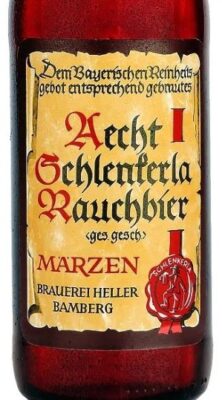 A few standouts have helped keep the style—or at least the idea of it—alive, and even these are now limited releases, that might disappear for a year or two, before making a celebrated return.
Notable Producers
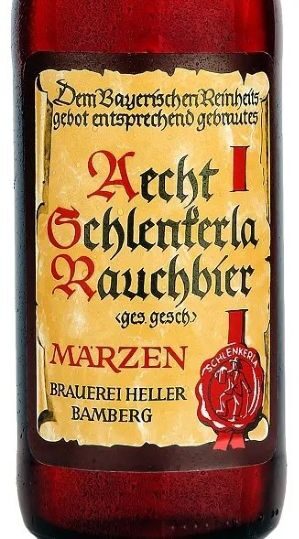
Schlenkerla (Heller-Bräu): The most famous producer in the world, brewing continuously in Bamberg since 1405. Their Märzen is the gold standard of the style.
Spezial: The only other brewery in Bamberg that still kilns its own malt traditionally over beechwood.
Modern Craft Examples: American brewers like Alaskan Brewing Co. (Alaskan Smoked Porter) and Switchback Brewing in Burlington, VT have popularized the style stateside.
Our Take
Even now, smoked beer remains deeply polarizing. Some drinkers can’t get past the aroma, while others find the combination of malt sweetness and savory smoke endlessly fascinating. It’s a style that demands attention—and maybe a little patience.
Still, the Rauchbier’s near-extinction is exactly what makes it worth drinking today. It’s a reminder that beer doesn’t always have to chase trends or smooth out its rough edges. Sometimes, survival means stubbornly tasting like history—even if that history smells a bit like a backyard barbecue.
###
About the Author: American Craft Beer