The Rise and Fall of Guinness Open Gate Brewery In Baltimore
The Rise and Fall of Guinness Open Gate Brewery In Baltimore
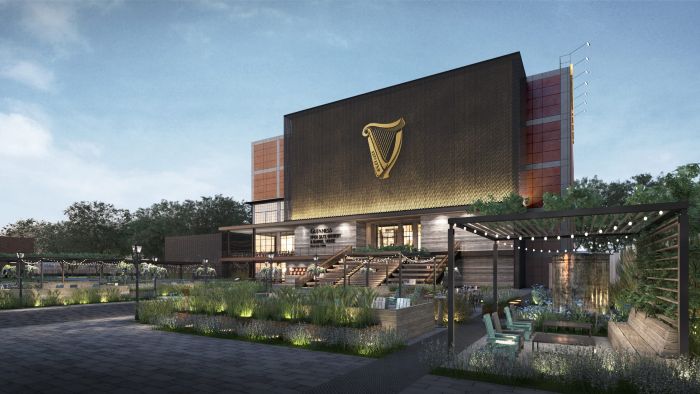
(Courtesy Guinness)
When Guinness opened its ambitious Open Gate Brewery & Barrel House just south of Baltimore in August 2018, it was a very big deal.
The sprawling operation marked the iconic Irish brewer’s return to American brewing for the first time since Guinness closed its New York brewery in 1954, and parent company Diageo wasn’t exactly dipping its toe in the water.
The drinks giant invested approximately $90 million in the Maryland project, transforming a historic property once home to the Calvert Distillery into a major brewing, packaging and visitor destination.
It was an enormous renovation project and expectations were high.
The new Guinness operation included a 10-barrel experimental brewhouse and a much larger 100-hectoliter production brewery, along with packaging and warehousing operations, a taproom, restaurant and expansive outdoor beer garden.
More than 200 jobs were tied to the project, which Guinness envisioned as both a serious production facility and an American counterpart to its legendary St. James’s Gate brewery in Dublin.
But ironically, and maybe tellingly, Guinness Draught, the brand’s world-famous stout, continued to be brewed in Ireland and imported to the United States.
Initially, the Open Gate launch in Baltimore attracted Guinness fans from all over the mid-Atlantic.
More than 100,000 people visited during its first three months, and roughly 400,000 came through its doors during its first year, blowing past Guinness’ original projection of 300,000 visitors.
But what looked like a promising new chapter for Guinness in America began changing dramatically five years later.
In April 2023, Diageo announced that it was shutting down large-scale production, packaging and warehousing at the Maryland site.
The company said the production facility had become underutilized, and nearly 100 employees lost their jobs.
The visitor center, restaurant and smaller 10-barrel experimental brewery remained open, but the operation that Guinness had launched with so much fanfare was suddenly a fraction of its former self.
About the Author: American Craft Beer