Is AI Coming For The Brewing Industry?
Is AI Coming For The Brewing Industry?
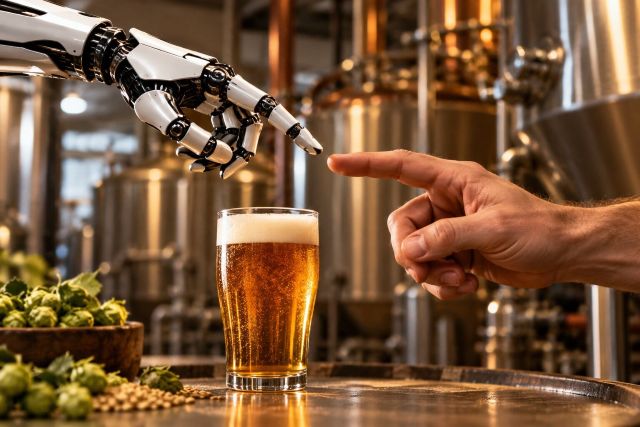
Artificial intelligence is suddenly everywhere, whether you’re ready for it or not.
“It already writes many of the emails you’re receiving, recommends what you should watch next and occasionally tells you something with absolute confidence that turns out to be completely wrong.”
And increasingly, AI is finding its way into the brewing industry.
But before anyone starts freaking out with images of the Terminator controlling the world’s breweries, what’s really happening is considerably more practical.
AI isn’t replacing brewers. At least not yet.
But breweries are beginning to use artificial intelligence to tackle some of the less romantic parts of making beer, from managing raw ingredients and monitoring fermentation to predicting production schedules and catching potential problems before thousands of gallons of beer go sideways.
And that may be where AI actually makes more sense.
Brewing has always been a sometimes magical combination of art, science and repetition. A brewer might develop a beer using experience and instinct, but once that recipe goes into regular production, consistency becomes everything.
AI can now analyze enormous amounts of brewing data and identify patterns that would be difficult for even an experienced brewing team to spot.
That can begin long before the beer reaches the brewhouse.
Artificial intelligence is already being used for barley breeding and grading, malt processing, hop selection and even yeast development. And once brewing begins, those systems can track variables such as temperature, pressure and fermentation activity.
And AI’s entrance into the fermentation process is fast becoming a game-changer.
If a brewery can more accurately predict when a beer will finish fermenting, it can better determine when that tank becomes available for the next batch. Multiply those decisions across dozens of tanks and hundreds of batches and small improvements can start becoming serious efficiencies.
And AI is also moving into quality control.
Sensory technology combined with machine learning can analyze aromas, flavors and potential brewing faults. Computers can now evaluate things such as beer color and foam, while increasingly sophisticated analytical systems can flag abnormalities before a beer ever reaches the consumer.
Then things get considerably more futuristic.
Voice-recognition technology is being developed that could allow brewers working on the production floor to enter information without stopping what they’re doing to find a computer or tablet.
A brewer taking a gravity reading could simply speak the result and have it entered into the brewery’s production system. In more advanced applications, contextual systems could potentially recognize where the brewer is standing and which tank is being discussed.
That may sound like a small thing, but anyone who has spent time around an operating brewery knows that brewers aren’t sitting behind desks all day. They’re in industrial mode: hauling hoses, checking tanks, moving ingredients and cleaning things endlessly.
AI may also prove useful for something breweries accumulate enormous amounts of but aren’t always particularly good at organizing: information.
Brewing operations generate production records, maintenance histories, equipment manuals, standard operating procedures and years of institutional knowledge. AI systems built specifically around a brewery’s own information could allow employees to ask questions and immediately retrieve relevant procedures or historical brewing data without digging through files.
None of this is quite as sexy as asking ChatGPT to invent the beer of the future.
And that’s the point.
And yes, breweries are already gaming-out AI-generated beers. Beck’s famously introduced Autonomous in 2023, a limited-edition beer that the company said was developed with the help of artificial intelligence, including its recipe, branding and marketing.
Other brewers have played with AI-generated recipes as well, sometimes seriously and sometimes simply because putting “AI” on something was guaranteed to get attention.
But asking a chatbot to create a beer recipe exposes one of the technology’s biggest weaknesses.
And generative AI can’t actually taste beer.
It can analyze recipes, brewing literature and enormous amounts of existing information, but it doesn’t know what a great Pilsner tastes like on a hot afternoon. It doesn’t experience aroma, texture or balance the way a brewer does.
And AI can hallucinate.
A system can suggest ingredients that don’t exist, confidently provide questionable brewing information or recommend combinations that seem perfectly reasonable on a screen and taste terrible in a glass.
That’s an important distinction, especially for craft brewers.
Beer is agricultural. It’s sensory. It’s regional. And at its best, it’s innately human.
And Artificial intelligence isn’t likely to replace that.
But it is increasingly handling some of the things surrounding it.
And maybe that’s where artificial intelligence ultimately belongs in the brewing industry.
Not creating the next great beer.
Just giving brewers more time to do it themselves.
###
And while we’re at it, there’s this…
Heineken’s New AI Tap Creates 135 Different Beers
Artificial Intelligence Picks The Top 20 Best Mass-Market Lagers
About the Author: American Craft Beer