Cult Beers: The Trumer Pils Story
Cult Beers: The Trumer Pils Story
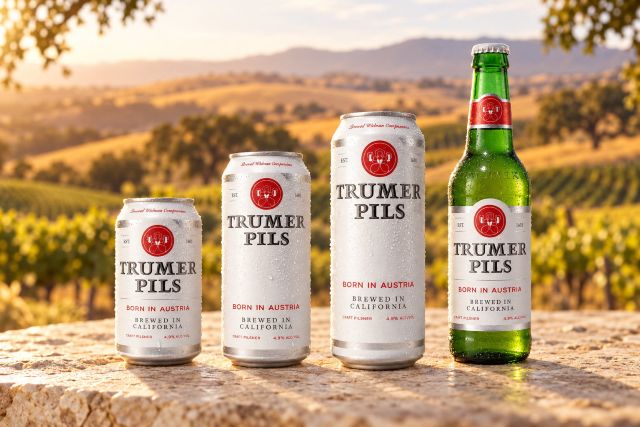
Trumer Pils occupies an unusual place in American beer. Its roots are Austrian, its style is German, and its American following grew around a brewery in Berkeley, California.
That combination gave beer drinkers something distinctive: a traditional European pilsner brewed in the States, with a freshness that’s central to its identity.
Today, following the transfer of its U.S. operations to Firestone Walker, Trumer is entering another chapter in a history that stretches from a small Austrian town to California’s Central Coast.
The Austrian Roots
Trumer’s history begins in Obertrum am See, near Salzburg, where Archbishop Wolf Dietrich approved the town’s brewing rights in 1601.
In 1775, hops merchant Josef Sigl acquired the brewery, beginning a family association that continues under eighth-generation owner Josef C. Sigl.
Those dates establish the brewery’s heritage, although the pilsner that American drinkers recognize today developed much later. In 1985, Josef Sigl VII modernized the Austrian operation and concentrated its brewing identity around pilsner.
That distinction matters. Trumer’s story encompasses more than four centuries of brewing, but its modern reputation rests on a deliberate commitment to one particular style.
A European Beer Finds A California Home
Trumer’s American chapter began in 2004, when Carlos Alvarez, founder of The Gambrinus Company, established a sister brewery in Berkeley.
The reasoning was practical. Brewing Trumer Pils in California would allow American consumers to experience the beer without the lengthy journey from a European brewery.
Alvarez assembled a brewing team that used imported European hops, malt and Trumer’s proprietary yeast. Longtime brewmaster Lars Larson helped establish the American beer’s reputation, maintaining its connection to the Austrian original while building a following of its own.
But Berkeley was more than a production hub. It gave Trumer an American home and a place within Northern California’s craft beer culture.
The Beer Behind The Following
Trumer Pils is a 4.9% ABV German-Style Pilsner with a light body, pronounced carbonation and a clean, refreshing finish.
Its ingredients include German pilsner malt, Saaz, Spalter and Aurora hops, and a proprietary pilsner yeast strain. The brewing process includes removing malt husks to reduce astringency, cold fermentation and extended kräusening, a traditional technique involving the addition of actively fermenting beer.
In the glass, those choices produce a delicate malt foundation, floral and spicy hop character, and a firm bitterness that remains measured.
Its appeal comes from the relationship between those elements. The malt provides enough substance, the hops give the beer definition, and the finish keeps it approachable.
Recognition Beyond California
Trumer’s reputation is backed by an impressive competition record.
The American brewery earned World Beer Cup gold medals in 2006, 2008 and 2016, along with a Great American Beer Festival gold medal in 2010.
In 2025, Trumer Pils received both Best Pilsner and Champion International Beer honors at the Australian International Beer Awards. By then, Trumer USA reported 21 gold medals across major international competitions.
A New California Chapter
On March 27, 2026, Firestone Walker announced an agreement to take over Trumer Pils’ U.S. operations, with brewing moving to its Paso Robles facility as Gambrinus wound down the Berkeley brewery.
That transition placed responsibility for the beer with Firestone Walker brewmaster Matt Brynildson, who described the assignment as protecting its established balance and drinkability.
For longtime followers, the move marked the end of Trumer’s Berkeley run. It also provided a path forward for a beer whose identity remained closely tied to its European origins.
Trumer’s American production has now relocated to California’s Central Coast, continuing the domestic brewing approach established in 2004.
###
Want more Cult Beers?
We’ve got ‘em…
Cult Beers: The Narragansett Brewing Story
Cult Beers: The Quirky History Of Busch Light Apple
Cult Beers: Busch Light Lime Returns After Apple’s Massive Success
About the Author: American Craft Beer