Classic Beer Styles: The Brown Ale
Classic Beer Styles: The Brown Ale
In our “Classic Beer Styles” series, we take a closer look at the beers that helped shape brewing traditions around the world, where they came from, what defines them, and why they still matter today.
And clearly, the brown ale doesn’t always get the attention it deserves.
It doesn’t have the hop-driven intensity of an IPA, the dark mystique of a stout or the seasonal appeal of an Oktoberfest lager. But the brown ale has been around for centuries, and its influence on modern brewing is considerably greater than its relatively modest profile today might suggest.
The Basics
The brown ale is one of England’s oldest brewing traditions, although the beer we recognize today has evolved considerably from its earliest incarnations.
Historically, English brewers used brown malt to produce darker beers, long before the development of the pale malts that would eventually transform British brewing. Those early brown beers were quite different from today’s versions, and the term “Brown Ale” didn’t always refer to a clearly defined style.
By the 18th century, advances in malting technology had made pale malt increasingly attractive to brewers, and darker beers began evolving in different directions. Porter and stout developed their own identities, while the brown ale eventually emerged as a distinct, generally more approachable alternative.
The modern English brown ale really began taking shape in the early 20th century.
One important milestone came in 1927, when Newcastle Breweries introduced Newcastle Brown Ale, a beer that would become one of Britain’s most recognizable exports and help establish the brown ale’s international identity.
But that was just one interpretation.
Northern English Brown Ales developed a reputation for being drier, somewhat stronger and more restrained in their sweetness. Southern versions tended to be darker, sweeter and lower in alcohol, sometimes approaching the character of a mild ale.
Those differences would eventually become important when American craft brewers began exploring the style decades later.
Key Characteristics
First and foremost, the brown ale is an ale. It’s brewed with top-fermenting yeast rather than the bottom-fermenting yeast used in lagers. But the real story is the malt.
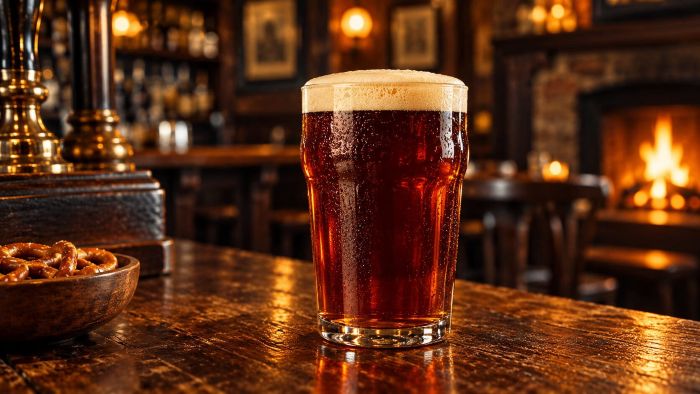
Traditional English Brown Ales typically range from approximately 4% to 5.5% ABV, although modern interpretations can fall outside that range. Their color runs from reddish brown and chestnut to deeper shades of mahogany.
A well-made brown ale delivers a layered malt character that can suggest toasted bread, biscuits, caramel, nuts, chocolate and occasionally a touch of toffee. The best examples balance that malt richness with enough hop bitterness to keep things interesting, while allowing the beer’s underlying grain character to remain front and center.
English hop varieties generally contribute earthy, floral or subtly herbal notes without overwhelming the beer. Fermentation can add a restrained fruitiness, particularly in traditional British examples.
American Brown Ales often take things further.
When American craft brewers embraced the brown ale, they frequently increased the alcohol content, upped its roasted malt character and introduced a more assertive hop presence. The result was a distinctly American interpretation that retained the brown ale’s essential malt character while giving it a little more bite.
A good brown ale can be rich without being heavy, complex without becoming challenging, and satisfying without demanding our complete attention.
Classic International Brown Ales
Newcastle Brown Ale is arguably the world’s most recognizable brown ale and an important part of the style’s modern history. Originally introduced in Newcastle upon Tyne in 1927, the beer helped popularize a relatively accessible, malt-forward interpretation of the English brown ale around the world. Although its recipe and production arrangements have changed over the years, its historical influence is undeniable.
Samuel Smith’s Nut Brown Ale is another classic and one that offers a more traditional expression of English brewing. Produced by the historic Samuel Smith brewery in Tadcaster, England, it delivers a rich combination of toasted malt, nuttiness, caramel and restrained fruitiness, with a smooth finish that never becomes overly sweet.
Manns Brown Ale deserves mention for historical reasons as well. First brewed in London in 1902, it became closely associated with the sweeter, lower-alcohol Southern English Brown Ale tradition. Its influence helped establish the distinction between northern and southern interpretations of the style.
Notable U.S. Brown Ales
Brooklyn Brown Ale helped establish the style during the early years of America’s craft beer movement. Introduced by Brooklyn Brewery in the late 1980s, the beer brought a more assertive American approach to a traditional English style, combining roasted malt, chocolate and caramel notes with a more noticeable hop presence.
Bell’s Best Brown Ale is another American classic. First introduced in the 1980s, the Michigan brewery’s seasonal interpretation became a recognizable part of its fall lineup, delivering toasted malt, caramel and nutty flavors in a balanced, approachable package.
Big Sky Brewing’s Moose Drool Brown Ale is one of the most recognizable American examples and a beer that helped introduce countless drinkers to the style. The Montana brewery’s flagship combines chocolate and caramel malt character with a smooth, relatively restrained finish. And that memorable name certainly hasn’t hurt.
Cigar City Maduro Brown Ale takes the style in a slightly different direction. The Florida brewery’s English-style brown ale is brewed with oats, which contribute to its smooth texture, while chocolate, espresso and toasted malt notes give it a distinctive character.
Our Take
The brown ale occupies an interesting place in 2026.
In today’s hop-crazed craft beer environment, the Brown Ale has become an almost niche style. They’re just not considered to be sexy but they are dependable and there’s always as place for that, especially during the winter months when rich malt-forward beers serve the moment.
The Brown Ale is a classic beer style that’s survived centuries of changing tastes, evolving brewing techniques and countless new competitors.
It’s a foundational beer style with an undeniable heritage that has withstood the test of time.
And it’s never going away.
About the Author: American Craft Beer

Get Social

Join Our Newsletter