Brewers, Beer And The Real History Of Labor Day
Brewers, Beer And The Real History Of Labor Day
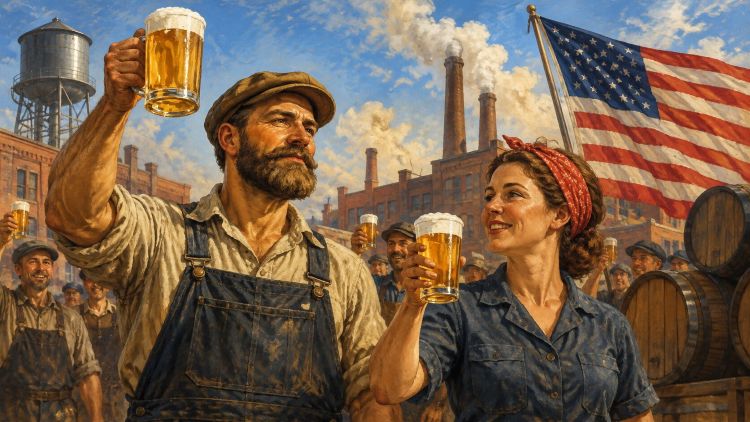
Labor Day and beer go way back.
Of course there’s the long weekend. The beach or backyard grill. One last unofficial blast of summer. And, for millions of Americans, there’s beer.
But the connection between beer and Labor Day is considerably deeper than you might think.
Beer has been part of America’s working-class story for generations, and brewery workers played their own role in the labor movement that eventually transformed the American workplace.
By the late 1800s, brewing had become big business in cities such as Milwaukee, St. Louis and New York. German immigrants brought their lager traditions to America, built breweries and beer halls, and helped turn beer into an everyday part of urban life.
They also brought a strong tradition of worker organization with them.
Brewery workers were early players in America’s growing labor movement, fighting for better pay, safer workplaces and, most importantly at the time, shorter working hours.
That fight came to a head in Milwaukee in 1886, when brewery workers joined thousands of other laborers pushing for an eight-hour workday. The demonstrations ultimately turned deadly at the Bay View Rolling Mills, where Wisconsin militia opened fire on striking workers, killing several people.
The tragedy became known as the Bay View Massacre, one of the darkest chapters in Milwaukee’s labor history.
The brewery unions that emerged during this period were also notable for bringing together workers from different immigrant communities in an industry populated by Germans, Irish, Eastern Europeans and others.
The issues they fought over sound remarkably familiar today: wages, working hours, job security and safer conditions.
Then came Prohibition.
When the 18th Amendment effectively shut down the American brewing industry in 1920, brewery workers suddenly found themselves fighting for something even more fundamental: having a job at all.
Breweries scrambled to survive by producing everything from near beer and soft drinks to malt products, dairy products and ice cream. Thousands of brewery jobs disappeared.
Beer finally returned legally in 1933, and organized labor returned with it. As America’s major breweries grew into enormous manufacturing operations during the decades that followed, union jobs became an important part of the industry.
Then the beer world changed again.
The modern craft beer revolution, which exploded in the 1980s, was built around independence, creativity and an almost obsessive passion for brewing. Workplace organization wasn’t necessarily part of that original culture.
And as the craft beer industry matured, labor issues inevitably followed.
Over the last several years, employees at a number of craft breweries have pursued union representation, including workers at San Francisco’s Anchor Brewing and Creature Comforts Brewing in Athens, Georgia. The breweries may have been smaller and the beer considerably different, but many of the workplace issues remain the same.
Fair pay. Reasonable schedules. Safe workplaces. A voice on the job.
Which brings us to Labor Day 2026.
Most people enjoying a beer this weekend aren’t thinking about Milwaukee brewery workers in 1886, and that’s okay.
But it’s worth taking a moment to acknowledge that Labor Day exists because generations of working Americans fought for things that we might take for granted today. And brewery workers were part of that history.
So enjoy your long weekend. And definitely the beer.
But maybe raise one to the people who brewed it.
They’ve earned it.
###
And while we’re at it there’s this…
About the Author: American Craft Beer

Get Social
Join Our Newsletter