A Pilot Batch Is More Than a Smaller Brew
A Pilot Batch Is More Than a Smaller Brew
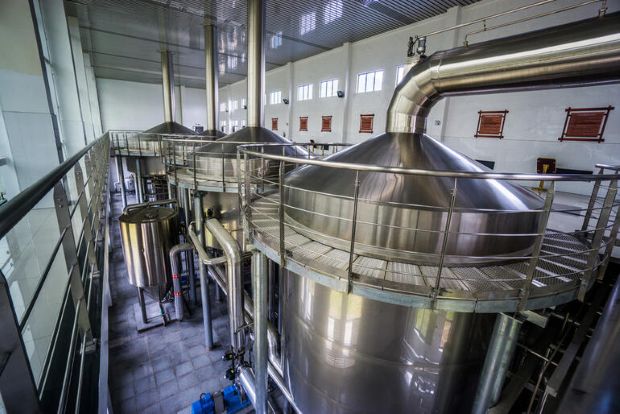
Those three lines of production tanks look somewhat like a toy in comparison to a good brewing system of that size. It may not always be gargantuan-sized batches, but it’s our job, and it carries a great weight. This is the main point at which a brewery can experiment with a component, discover a bad beer formula, and gather data that will help the next time.
Pilot brewing allows the brewer to test out and play with new ideas without having to risk the costs of a production failure. The benefit isn’t just economical, though: It can take a small trial to discover just how a recipe will work with larger brewing systems, as it can come to flavor consistency, fermentation results, and much more. It’ll help the beermakers make slight changes between stages, discover problems at the earliest possible time, and provide top-quality outputs.
Small Equipment Answers Specific Questions
A pilot batch starts with a clear objective. The brewing team might evaluate different yeast strains, adjust bitterness levels, experiment with a new hop product, or test whether a new adjunct complements the beer after fermentation. They can also assess how a beer flavored with a particular ingredient develops during the brewing process. Changing too many variables at once makes it harder to draw reliable conclusions from the results.
The small system can respond to queries that may have cost a lot on the principal brewhouse:
- Does Yeast bring out the desired fragrance at the desired temperature?
- Does the fruit tone over the base beer?
- What percent of the liquid is lost in fermentation and transfers?
- Is the beer still balanced when carbonated?
- Will it remain unchanged in colour and haze after packaging?
Additionally, the batch provides clues to real-world problems. A thick mash will not transfer, an ingredient can block the equipment, or a good smell will not develop. There is no need to invest in a massive batch of products for these lessons.
Testing Comes Before a Wider Release
Digital businesses also use limited testing before making a feature widely available. A casino may examine navigation, payment routing, and bonus display rules with a restricted audience. Information published at https://online-casinosaustralia.com/ helps compare Australian casino offers. The individual rules and conditions for eligibility and wagering for each promotion apply. There is always the chance that this could lead to confusing instructions being uncovered as a result of testing before more account holders run into them.
The act of running a tasting room is another sort of research function for a brewery. Running a pilot beer can be on one tap and will have an appropriate description and number of kegs. Repeat sales and orders, as well as direct comments, provide other signals. When something sells quickly, that doesn’t automatically mean it is a good recipe for making it popular. A novelty or brilliant naming idea, or the event of a release, can run a keg out. The better question is whether or not drinkers drink another glass after their initial curiosity has worn off.
Scaling Changes the Brewing Process
A good recipe for a pilot project can’t be copied; it just can’t be. All of these factors: kettle geometry, kettle brew method, amount of evaporation, and parameters of the brewhouse, influence the final type of beer produced. In larger systems, an adjustment in the hops could be required to achieve the correct bitterness, even if the bitterness appears correct based on the hop-to-batch ratio. Grain extraction may increase and decrease, thus affecting alcohol content and body. Transfer through the fermenters is also done differently for large fermenters, and transfer through pipework and pumps also adds heat transfer losses.
The Brewers Association’s presentation on moving pilot beer into production identifies process variability, chilling, cold crashing and cost as factors requiring attention. The scaling up of the beer means that it is re-translatable to another system, not just “oh I want more malt and hops. Brewers use previous brewing seasons to create brewer equipment profiles. They are familiar with the amount of mash that they require and know what the evaporation rates will be and how much will remain when transferring the mash. When you are dealing with the first full-scale brew still, it’s important to closely measure it, as there are a lot of physical differences that can’t be figured out.
A Good Trial Includes the Package
The beer has not undergone all tests yet; it has only been sampled directly from a pilot fermenter. Packaging adds oxygen to the package, carbonation decisions, and packaging container performance. Beer that has been dry-hopped might not have that sharp, fresh, brezy character. Dry-hopped beer is completely different when fermentation is not finished at the proper temperature. When not finished at the proper temperature, someone’s beer won’t be the same when they dry-hop it.
It is impossible to guarantee a successful taproom release without monitoring the beer after packaging. Using pilot system equipment, which is used to prepare and test samples, it enables brewers to monitor aroma and flavour, carbonation, clarity, and stability as soon as it’s packaged, and then weeks later. In an ideal world, the sensory session is held under identical conditions: temperature of glasses, the order of sampling, serving temperature, all glassware is the same, etc., as this minimizes interferences. Written notes will help to ensure that decisions are made based on everyone’s observation and aren’t based on whose voices are the loudest in the room if everyone doesn’t have a chance to drink before the discussion.
Failure Can Be a Productive Result
Not all beer flights are worth rescuing. Some are well written but the same as in an already released book. Others rely on an ingredient that is not reliable, expensive, or hard to process. You may have a beer that tastes terrific but requires a significant amount of time that may or may not be warranted, based on how many people are likely to buy it. It doesn’t mean to say the work was pointless that such a decision was made. The brewery has become educated on an ingredient, gathered system information, and steered clear of filling a big tank with a batch of a problem ingredient. Some elements in the recipe may be used again in another beer.
Good taste establishes the potential of a beer for brewers. It provides useful insights into flavor, pricing, and production scaling. This information helps a local brewery identify potential problems, fine-tune recipes, and make informed decisions before producing larger quantities. A small brewhouse proves its value by answering difficult questions early, before scaling up introduces costly mistakes.
About the Author: Beer Blog