7 Classic Beers From The ’70s
7 Classic Beers From The ’70s
The music got louder, the hair got longer, and Americans discovered they could argue about whether a beer tasted great or was less filling.
Beer was changing in the 1970s. National brands were getting bigger, light beer was finding its audience, and regional breweries were fighting to keep their place in the cooler.
But where you lived still had plenty to do with what you drank back in the ’70s. And getting your hands on a beer unavailable back home could make you the MAN at the party.
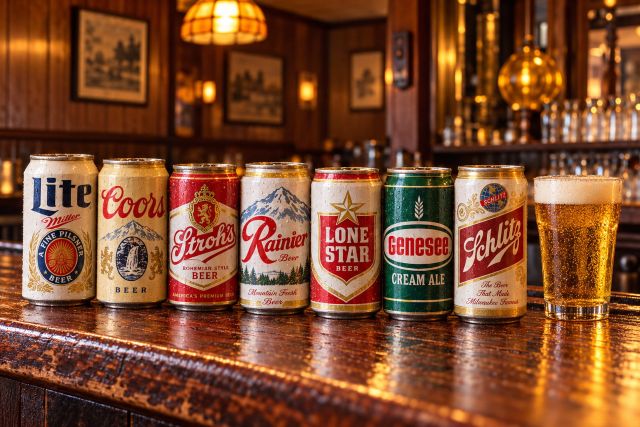
Here are seven classic beers that helped keep the decade properly refreshed.
Miller Lite
Few beers belong on a ’70s list more than Miller Lite.
Rolled out nationally in 1975, it helped turn light beer into a major American business. Earlier attempts had struggled with the suggestion that drinking fewer calories meant sacrificing something. Miller made the choice look like a good time.
Its famous “Tastes Great! Less Filling!” campaign put athletes and colorful personalities into arguments that eventually spilled into actual bars. You didn’t need to follow beer advertising to know the lines. Someone else in the beer aisle would happily supply them.
Coors Banquet
For much of the country, Coors was the beer somebody brought back from a trip out West.
Its limited distribution gave the Colorado lager a mystique that national advertising couldn’t easily buy. Whether it tasted better than the beer down the street was almost beside the point. You could get that beer anytime.
Then Smokey and the Bandit arrived in 1977, turning a truckload of Coors into the reason for an interstate chase involving Burt Reynolds, Jackie Gleason and a spectacular disregard for traffic laws.
Most beers were happy to get a commercial. Coors got a movie.
Stroh’s
In Detroit, Stroh’s was part of the local vocabulary.
The brewery’s roots stretched back to 1850, and its “fire-brewed” identity gave drinkers something distinctive to order long before beer menus came with tasting notes. The phrase referred to a brewing process that became the company’s trademark in 1914.
By the ’70s, Stroh’s was reaching well beyond its hometown. But its appeal remained tied to a passionate regional loyalty that made choosing a beer feel a little like choosing your football team.
Rainier
The Pacific Northwest had its own beer loyalties, and Rainier knew how to get people’s attention.
During the 1970s, the Seattle brand embraced wonderfully strange advertising that gave its beer a personality far removed from the usual promises about refreshment. Rainier could be funny, odd and thoroughly comfortable with both.
That mattered in a region where national brewers were pushing into territory long served by local names.
Lone Star
In ’70s Texas, Lone Star found itself in some very good musical company.
The beer became closely associated with Austin’s emerging progressive country scene, where longhairs and cowboy hats were learning they could enjoy the same show. At the Armadillo World Headquarters, cold Lone Star was part of an evening that might broaden your definition of country music.
Its association with Willie Nelson helped carry that identity beyond Austin.
Genesee Cream Ale
Not every memorable ’70s beer was a lager.
Introduced in 1960, Genesee Cream Ale gave the Rochester, New York, brewery a signature beer that carried comfortably into the following decade. Smooth and approachable, it offered a different name and character at a price that made it an everyday beer.
By the ’70s, Genny Cream Ale had become a familiar choice in upstate New York and beyond, building the kind of regional following that kept local brands competitive as national brewers expanded.
Schlitz
Schlitz entered the decade as one of the biggest names in American brewing. Unfortunately, the ’70s also brought decisions that helped unravel that standing.
Changes to production damaged the beer’s reputation, and a major 1976 recall made an already difficult situation worse. A brand that had spent generations building trust discovered how quickly drinkers could order something else.
But leaving Schlitz out of a ’70s beer list would miss how much of the decade it occupied, both as a familiar favorite and as a cautionary tale.
America’s beer business was getting bigger. Schlitz showed that getting the beer right still mattered.
Where These Beers Stand Today
Most of these names are still around. Miller Lite and Coors Banquet remain national fixtures, while Stroh’s, Rainier, Lone Star and Genesee Cream Ale carry on with varying levels of availability and plenty of hometown affection.
Schlitz is the exception. Pabst put Schlitz Premium on hiatus in 2026, citing rising storage and shipping costs, although the company left the door open for another return.
The beer aisle has changed considerably since the ’70s. But we suspect more than a few readers can still name the beer their dad (mullet included) kept in the fridge.
###
And while we’re at it, there’s this…
About the Author: American Craft Beer